Protecting From Sensory Overload
Allie Barnett, CEO
I recently had the treat of attending a “Space Holders Retreat” held by Iron Bell Ministries in Louisville. If you are a caregiver, in leadership or parent, I highly suggest it! At the beginning of the retreat, they have optional quizzes for you to see what type of rest you are in need of. The options were mental, spiritual, physical, emotional, creative, social or sensory rest. I was off the charts in need for “sensory rest”. At 35 years old, it’s amazing what I am still learning about myself! I am diagnosed ADHD, can be overwhelmed easily by auditory or tactile input and can be easily triggered when my hyper-focus is interrupted. However, I had no concept of the idea of “sensory rest” as a form of self-care. I spent the day. . . literally hours. . . sitting in a rocking chair with my eyes closed and headphones on listening to bilateral stimulation calming music. The retreat included other lovely benefits and group activities of course. However, instead of engaging in all of them, I now understood that this was priority for me in that moment and WOW was it lovely!
In leaving the retreat, I further understood my strong desire to advocate and protect our participants on the spectrum from sensory overload. I am aware that it may partially be projection of my own needs and sensitivities. However, I can see this need confirmed in the participant’s feedback and their body language. This sensory sensitivity of my own has made me hyper-aware of this same need in many of our participants, particularly those with autism. The idea of "Protecting From Sensory Overload” is something I have taught from day one in the ways listed below. It is only now that I have a clearer understanding of the overall approach, the reasons why and the importance of it!
This is what I can share from my own experience, in hopes that it will build empathy and understanding for our participants: When I am in sensory overwhelm, (rarely now and well predicted) I feel like my heart is beating up through my throat, my chest is tight, and I have tears just behind my eyes. I feel angry and frustrated. I am working SO hard to focus on one thing and accomplish one task, while also holding thoughts or other important information in my head that is needed at the same time. Any words, auditory input, or interruptions that are unplanned or from outside sources can feel like an electric shock, making me angry and terribly overwhelmed. I understand it sounds irrational, so I feel guilty about feeling this way. I feel like I just need a break. Just need quiet. Maybe I just need a dark room for a minute, a total lack of demand and input for a few moments. But that is never available in these moments, because there is alway something that needs done. This is me, a 35 year old, mostly neuro-typical woman.
Now imagine, I have the developmental brain of a 6 year old, have very little control over what I eat, where I go, what I wear and much of my day. Imagine I am unable to communicate with my words due to a diagnosis of autism. When you are too loud, I can’t tell you, I may just cover my ears. When you touch my arm and it hurts, I can’t tell you, I may just pull away. When my heart feels like it is beating out of my chest, I can’t explain, I may just scream and wiggle or maybe just curl up on the ground.
At Justin’s Place, I want to be the place where we LISTEN to those non-verbal signals. I want to protect them sensory overload at all costs. I prioritize silence. . . deep breaths. . . pauses. At Justin’s Place, we drop our agendas and goals when needed. I want Justin’s Place to be the sensory safe reset that so many of our children (and also Parents!) need. I could give hundreds of scenarios where this has been practiced (or not practiced) and how the need for no or low input was demonstrated by our participants. For brevity sake, I will list the ways we aim to implement this here:
Ways We Protect From Sensory Overload
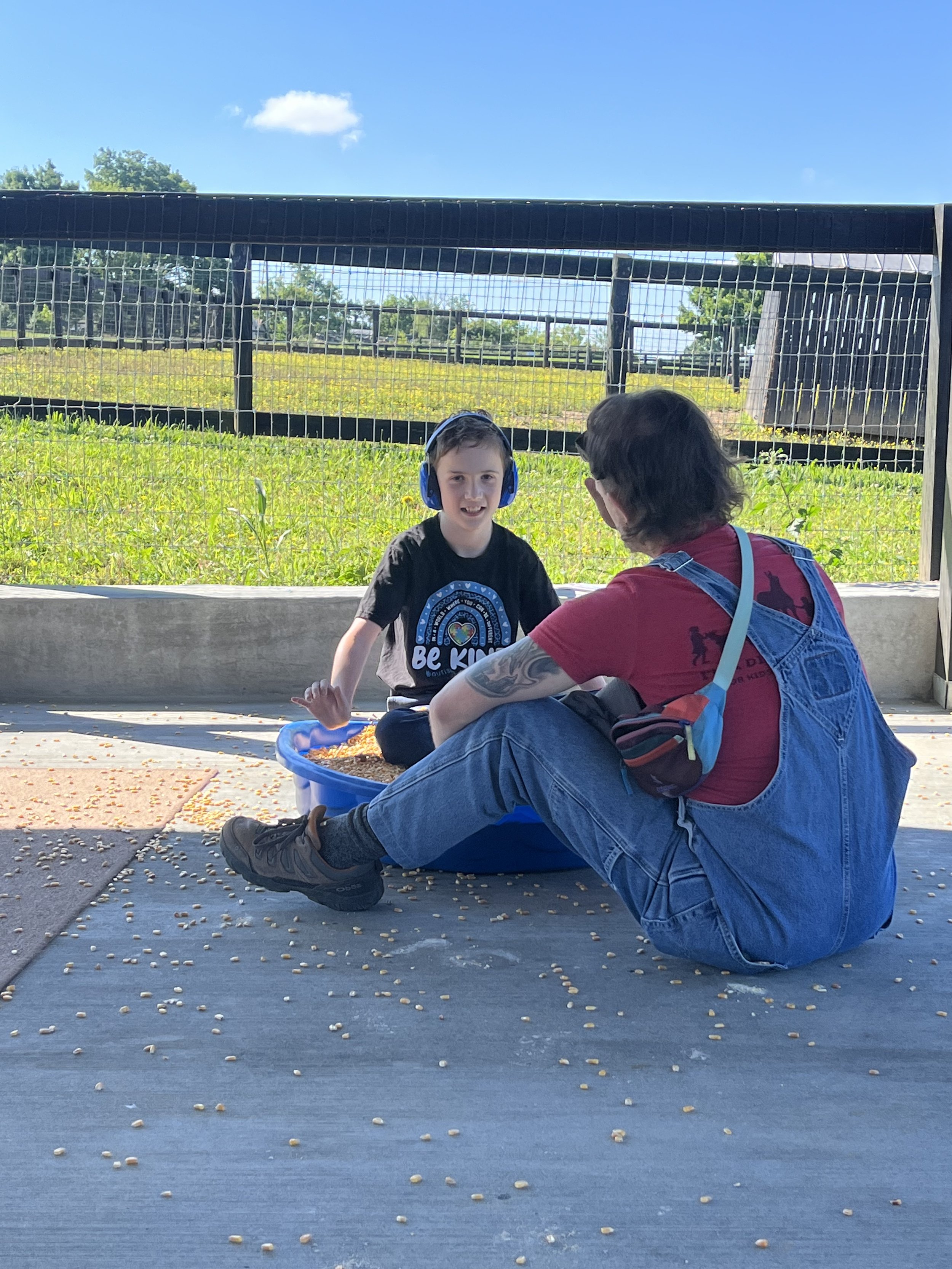
Allow and provide participants headphones or ear plugs
Encourage low volume and give warnings prior to mandatory loud noises (gates slamming, donkey braying, garage door opening)
Encourage no perfumes of staff and volunteers
Allow participants to move away from “stinky” areas when possible
Allow participants to explore everything with all of their senses as long as their is no safety risk
Refrain from putting hands on participants unless absolutely neccessary or requested by the participant (ex: hug)
When we must put hands on a child (ex: safety hold when riding) we tell them before doing so
When we have other forms of touch such as putting on a helmet, we tell them before doing so and often offer countdowns
We verbalize or acknowledge what the child may be experiencing through their senses (ex: that bunny feels so soft or the concrete feels very warm!)
We respond to non-verbal feedback and allow for sensory breaks when able (ex: allowing for helmet breaks or no-talk/ hands-off breaks with zero input)
Directives over questions to decrease mental demand (ex: instead of ‘are you ready to ride?’ we say ‘it’s time to ride’
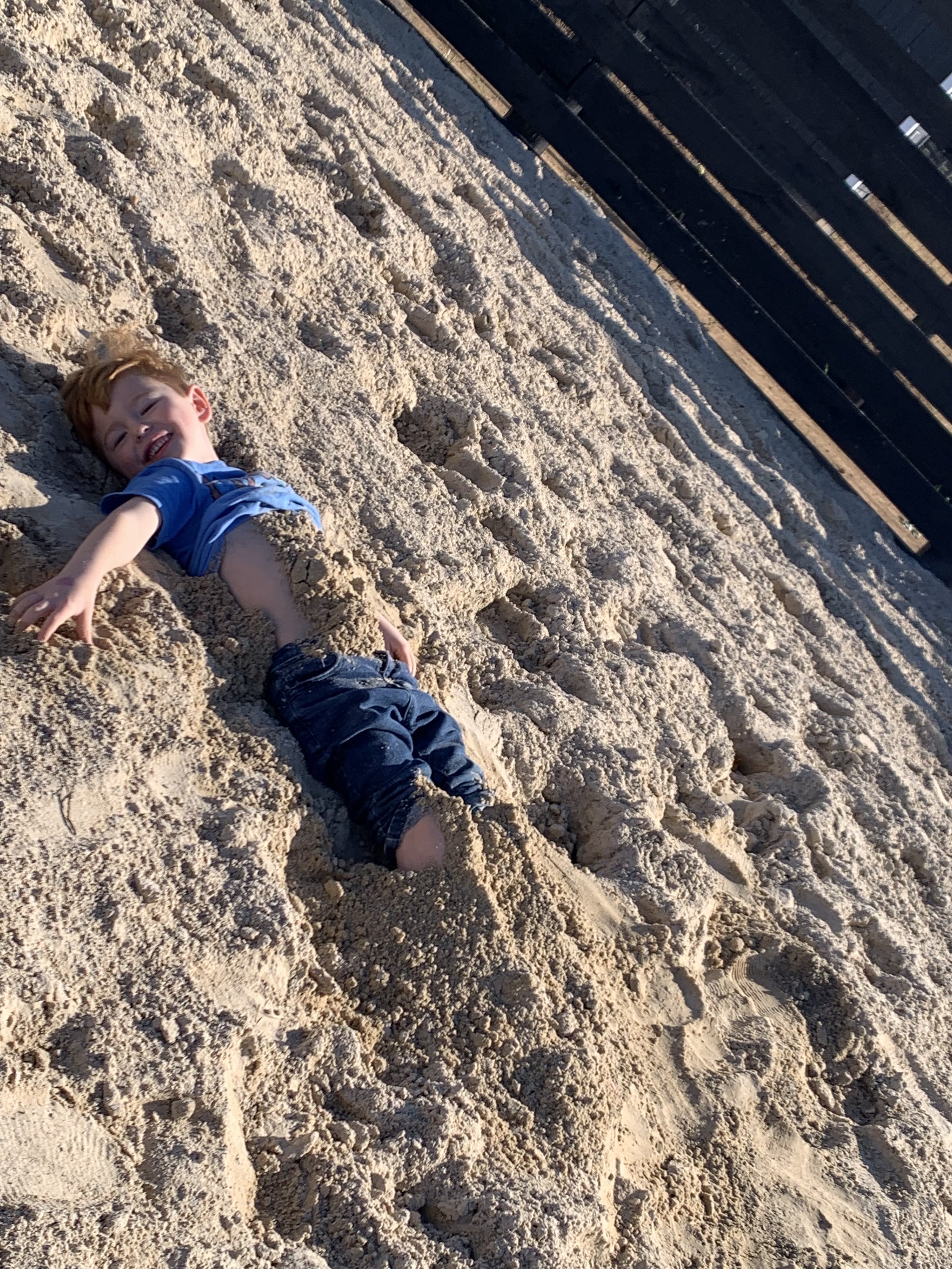
Provide preferred sensory resetting activities: sand play, corn play, deep pressure hugs or squishes with a cushion, deep pressure squeezes or compression while riding, jumping, spinning, ANY input the child tells us they like that assist them